Loading...
First Round of Abstract Submission Ends: Dec 31, 2026
Extended Early Bird Ends: Nov 28, 2026

Plenary Speakers

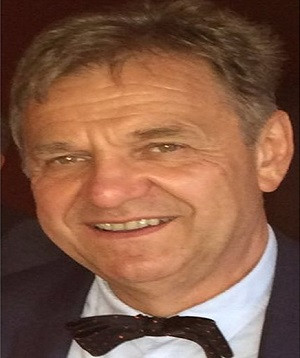
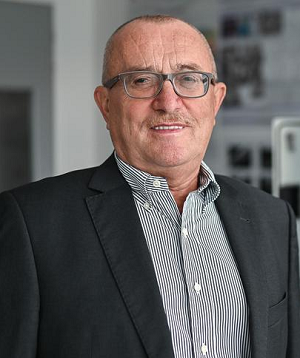
Prof. Michael Giersig
Polish Academy of Sciences, Poland
Title: Nanotechnology in Energy and Healthcare: Breakthroughs and Barriers
Professor Michael Giersig is Full Professor at the Institute of Fundamental Technological Research, Polish Academy of Sciences (IPPT PAN), Warsaw, where he heads the Department of Theory of Continuous Media and Nanostructures. He is also Emeritus Professor at the Institute of Experimental Physics, Freie Universität Berlin. Professor Giersig’s scientific career has been devoted to the investigation of advanced nanomaterials and nanostructured systems, with particular emphasis on the synthesis, physicochemical characterization, and functionalization of nanoparticles and their applications in electronics, energy-related technologies, and biomedicine. His research encompasses the development of innovative chemical and physical synthesis strategies and the fundamental investigation of the structural, optical, electronic, and physicochemical properties of nanoscale materials. His work has contributed to establishing fundamental structure–property relationships that underpin the development of advanced nanomaterials for emerging technological and biomedical applications. Professor Giersig has published more than 320 internationally peer-reviewed scientific papers in leading journals across a broad range of disciplines, including physics, chemistry, materials science, biochemistry, medicine, nanotechnology, and engineering. His scientific contributions have received more than 26,400 citations according to the ISI Web of Science database, excluding self-citations. He has an h-index of 81, with an average of 82.74 citations per publication, reflecting the substantial international impact of his research. In recognition of his sustained scientific contributions and international research impact, Professor Giersig was included among the top 2% of scientists worldwide in 2024 and 2025, according to the Scientific Index.
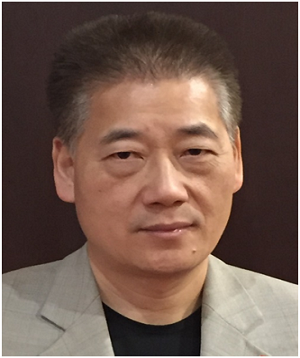
Prof. Chao-Jun Li
McGill University, Canada
Title: Engineering Semi-Conductor Photocatalysts for Sustainable Chemical productions
Prof. Chao-Jun Li received his Ph.D. at McGill University (1992), and was an NSERC Postdoctoral Fellow at Stanford University (US) (1992-94). He was an Assistant (1994), Associate (1998), and Full Professor (2000) at Tulane University (US). Since 2003, he has been the Canada Research Chair (Tier I) in Green Chemistry, E. B. Eddy Chair Professor of Chemistry, and the Distinguished James McGill Chair Professor at McGill University. He was the founding Co-Chair of the Canadian Green Chemistry and Engineering Network (2007), served as the Director of the NSERC CREATE Center for Green Chemistry (2009-2016), the Director of CFI Infrastructure for Green Chemistry and Green Chemicals (2009-2024), and the Co-Director for Quebec’s FQRNT Center for Green Chemistry and Catalysis since 2009. He was a pioneer in using water as a green solvent and a global leader in developing Green Chemistry for chemical synthesis. He received a US NSF’s CAREER Award (1997), US Presidential Green Chemistry Challenge Award (2001), 2010 Canadian Green Chemistry and Engineering Award, 2015 R. U. Lemieux Award and 2018 Alfred Bader Award of the Canadian Chemical Society, the 2020 Catalysis Award and the 2022 CIC Medal of the Chemical Institute of Canada, the 2021 Alexander von Humboldt Research Award, the 2025 Palladium Global Science Award, the 2002 JSPS Senior Fellow, and the 2018 Killam Research Fellow of the Canadian Council of Arts among others. Dr. Li was elected as a Fellow of the Royal Society of Canada (Academy of Sciences) (2012), the Canadian Academy of Engineering (2025), The World Academy of Sciences (TWAS) (2016), the European Academy of Sciences (2020), the Royal Society of Chemistry (UK) (2007), the American Association for the Advancement of Science (AAAS) (2012), the Chemical Institute of Canada (2013), the American Chemical Society (ACS) (2015), and the Chinese Chemical Society (2020). In 2007, the Canadian Chemical News listed Dr. Li’s research as among the top 20 most important Canadian chemistry discoveries of the past century. He was a highly cited researcher by Thomson Reuters/Clarivate Analytics (2014-2017) (>68,000, h-index 128). He was ranked #1 for "Bond Formation" in the world by Research.Com and ScholarGPS®, and the world top 0.05% scientist (#10 in organic chemistry) in the Stanford Ranking. He is on the UNIDO (United Nation) Global GreenChem Network Steering Committee and a Founding Board Member of the International Green Chemistry Consortium. He co-crafted the “Stockholm Declaration of Chemistry for the Future” by the Nobel Foundation in 2025. Website: https://www.cjlimcgill.ca/prof-chao-jun-li/
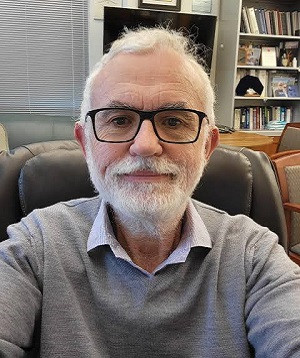
Prof. Vladimir Tsukruk
Georgia Institute of Technology, USA
Title: Functional Nanocomposites from Natural Polymers and Synthetic Nanostructures via Directed Assembly
Vladimir V. Tsukruk is a Regents’ Professor, a Director of Microanalysis Center at the School of Materials Science and Engineering, Georgia Institute of Technology, Atlanta, USA. He received MS degree in physics from the National University of Ukraine, PhD and DSc degrees in polymer science from the National Academy of Sciences of Ukraine. He carried out his post-doctoral research at the U. Marburg and Darmstadt TU as a Humboldt Fellow and at U. Akron. He has organized 15 professional conferences, delivered about 300 invited talks, and co-authored 580 refereed articles in archival journals as well as three books, which have been cited 46,000 times with H-index of 101. During his career, he has trained 120+ graduate students and post docs. Currently, he serves on the Editorial Advisory Boards of six professional journals and as an Executive Editor at ACS Applied Materials and Interfaces. and His research in the field of functional hybrid nanomaterials, surfaces interfaces, directed assembly of synthetic/natural polymers and multi-scale nanostructures, and bioinspired materials has been recognized by Fulbright Award, Sigma Chi Sustained Research Award, GT Outstanding Research Author Award, Humboldt Senior Research Award, and the National Science Foundation Special Creativity Award, among others. He is an elected Fellow of American Physical Society, Materials Research Society, American Chemical Society as well as a Fulbright Fellow and Humboldt Fellow.
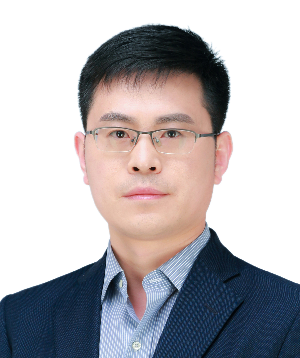
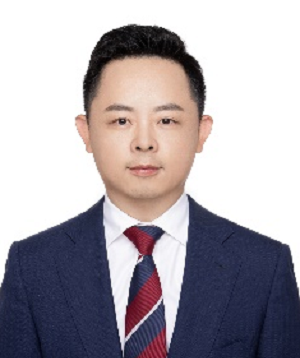
Prof. Rufan Zhang
Tsinghua University, China
Title: High-Performance Photothermal Regulation Materials
Rufan Zhang is a tenured associate professor, Principal Investigator and doctoral supervisor at the Department of Chemical Engineering, Tsinghua University. He is an awardee of the National High-Level Young Talents Program, and also serves as Youth Council Member of the Chinese Society of Particuology, Member of the Award Recommendation Committee of the Chinese Chemical Society, Guest Editor of Smart Materials and Devices, Editorial Board Member of Coating and Processes, and Youth Editorial Board Member of SusMat, Carbon Future, Carbon Energy, Carbon Neutralization, Carbon and Hydrogen, Particuology, Clean Energy and Exploration. His research mainly focuses on the controllable preparation, performance characterization and application of nanocarbon materials and photothermal regulating nanomaterials. He has published 150 papers in total, among which more than 100 papers were published in internationally renowned journals as the first/corresponding author, including Science, Nature Nanotechnology, Nature Sustainability, Science Advances, Nature Communications, Journal of the American Chemical Society, Angewandte Chemie International Edition, Advanced Materials, Nano Letters, ACS Nano, etc. He has presided over more than 10 projects, including key projects of the Science and Technology Commission of the Central Military Commission, general projects of the National Natural Science Foundation of China, and key projects of Sinopec. He has filed more than 20 invention patents and authored 7 academic monographs. He has won numerous honors and awards, including the 5th Qingshan Science and Technology Award (2026), First Prize of Natural Science of the Chinese Society of Particuology (2024), Second Prize of Scientific and Technological Progress of the China Petroleum and Chemical Industry Federation (2025), Youth Innovation Award of the China Petroleum and Chemical Industry Federation (2024), the first "Red Avenue Youth R&D Fund" of the China Petroleum and Chemical Industry Federation (2023), Second Prize of Natural Science of the China National Textile and Apparel Council (2024), "Hou Debang Chemical Science and Technology Youth Award" of the Chemical Industry and Engineering Society of China (2019), Youth Chemistry Award of the Chinese Chemical Society (2018), being selected into MIT Technology Review "35 Innovators Under 35" (China Region, 2018), China Emerging Sci-Tech Figure (2018), "National Excellent Young Scholar in Metamaterials" of the Chinese Materials Research Society (2024), "Future Chemical Engineering Scholar" of the Global Chinese Chemical Engineering Scholars Association (2024), "Outstanding Innovation Award" of the Engineering Science Society of USA (2025), being selected to the "Periodic Table of Chinese Young Chemists" for the 2019 International Year of the Periodic Table of Chemical Elements (2019), First Prize of Natural Science of the Ministry of Education of China (2016), and the Swiss Chorafas Young Researcher Award (2015).
Prof. Jan Dusza
Slovak Academy of Sciences, Slovakia
Title: Characterization and Testing of High Entropy Ceramics at Nano-Level
Professor Dusza is an internationally recognised, outstandingly qualified academic expert in fracture mechanics, fractography and the mechanical and tribological property evaluation of advanced ceramics.

More details at https://www.sav.sk/?lang=en&doc=user-org-user&user_no=1414&action=cv
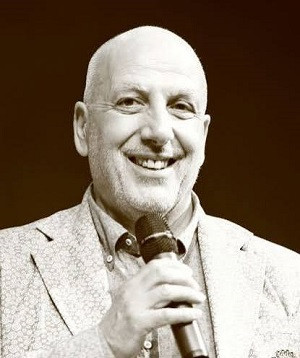
Prof. Bilu Liu
Tsinghua University, China
Title: Mass production and applications of 2D materials
Dr. Bilu Liu is a full Professor of Tsinghua University. He works on the mass production of 2D materials and their applications in electrocatalysis, electronics, and optics. He obtained bachelor’s from USTC, and PhD degree from Institute of Metal Research, CAS. He worked as a postdoctoral researcher and research assistant professor in University of Southern California from 2012 to 2016, and then jointed to Tsinghua University in 2016. He is a recipient of several awards including the Young Science Innovation Award of Guangdong Province, Excellent teacher of Shenzhen Municipality, Excellent Advisor Award of PhD and Master students of Tsinghua University, etc.
Prof. Guy Le Lay
Aix-Marseille University, France
Title: Xenestronics by Groundbreaking Realizations of Single Element Quantum Materials beyond Graphene
Guy Le Lay, Professor Emeritus at Aix-Marseille University, France, a renowned specialist in Surface/Nano-Science, graduated as an engineer at the School of Mines in Nancy, France (1968). He became Full Professor in Physics at the University of Provence, (1982), working on the formation of metal/semiconcductor interfaces. By reversing the systems in the 2000s, he pioneered the realization of silicene and germanene in Marseille, which triggered a gold rush for the synthesis of all other two-dimensional artificial single-element materials called Xenes. For these breakthroughs, which launched the area of Xenestronics, he was the winner of the Prestigious 2025 Prize for Science, awarded every three years by the International Union for Vacuum Science, Technology and Applications, after being the recipient of the International 2021 Fernand Holweck Medal and Prize awarded by the Institute Of Physics and the Société Française de Physique.
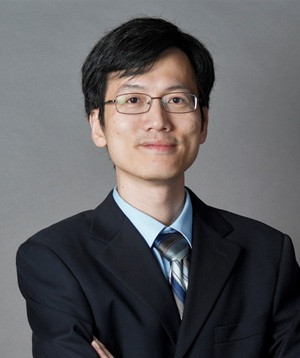
Prof. Wenjie Mai
Jinan University, China
Title: Some Fundamental Questions about Water and Aqueous Batteries
Mai Wenjie received his bachelor's degree in physics from Peking University, China and his doctorate in materials science and engineering from Georgia Institute of Technology, USA. He is currently a professor at Jinan University, China. He is a Clarivate Analytics Highly Cited Researcher and a recipient of the Nano Energy Award, among other honors. His research focuses on nano-optoelectronic and energy materials and related novel devices. He has published over 200 SCI papers, with over 30,000 citations and an h-index of 88
Prof. Gerd Bacher
University of Duisburg-Essen, Germany
Title: Scalable 2D Materials for Optoelectronics
Gerd Bacher studied physics and received his PhD at the University of Stuttgart, Germany. He continued his career as senior scientist at Würzburg University and joined Tokyo Institute of Technology, Japan, as a guest professor 1996/1997. In 2003, Gerd Bacher got a full professorship at the faculty of engineering at the University of Duisburg-Essen, where he co-founded the center of nanointegration (CENIDE). His research activities cover nanomaterials and nanodevices for optoelectronics, information science and energy applications, with a focus on 2D materials and nanocrystals. He published > 300 scientific papers and gave > 100 invited talks. Currently, he is co-speaker of an international research training group on 2D materials with > 30 PhD and MSc students, jointly funded by DFG and NSERC.
Prof. Patricia Kooyman
University of Cape Town, South Africa
Title: Nanomaterials for the energy transition
Patricia obtained her MSc from Leiden University (The Netherlands), studying the selective reduction of nitrosobenzene over mixed manganese oxides. She obtained her PhD from Delft University of Technology (The Netherlands) studying TS-1 zeolite synthesis and catalytic applications. Following a post-doc at Shell research centre (Amsterdam, The Netherlands), she learned all about TEM during a long post-doc period at the NCHREM (Delft, The Netherlands). Subsequently she was appointed assistant professor at the Chemical Engineering department (catalysis engineering group) at Delft University of Technology (The Netherlands). She came to South Africa in 2015 as SARChI Chair Nanomaterials for Catalysis.

She has always enjoyed travelling and has held many short-term visiting scientist positions throughout her career.

Her research focusses on heterogeneous catalysis, especially catalyst characterisation. She is an expert in high resolution transmission electron microscopy and is one of the pioneers in gas-phase in situ TEM.